The weather has been kind this week allowing a return to varibale star observations. This week I will take a look at the discovery process for new variable stars, as this week I had reason to understand and work through it due to detecting what appears to be a new variable star that has not been previously listed.
Discoveries of variable stars are normally a specific targeted activity, from either a target list of suspected variables in a particular constellation, or by star type researching the characteristics of the variables. Teams of astronomers usually collaborate over many observing sessions to gather data and write up their findings in a science paper that is then published in one of the journals. One such paper was published only this week by Alex Golovin, Kirill Sokolovsky, Natalia Virnina, Javier Lopez Santiago -
Three new Variable stars in Indus. The purpose of such papers is to provide data, classification information, star temperatures, period of variability, and assist scientists understand the behaviour, age and characteristics of these stars.

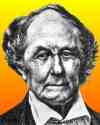
In 1844 the german astronomer
Friedrich Wilhelm August Argelander appealed, "I lay these hitherto sorely neglected 30 variable stars most pressingly on the heart of all lovers of the starry heavens" spawning the study of variable stars by professionals and amateurs alike. Over the past 160 years years the list has grown north of 30,000 with another 15000 suspected of being variable. Due to the massive number of variable stars and the limited number of observers, alas many still remain neglected.
Today we know there are two types of variable stars (and I don't mean one of those amusing bumper stickers - those that are and those that aren't). The two types are intrinsic and extrinsic - ie variability within the star and variablily external to the star. The stars then fall into a number of classifications related to the behaviour within these two types.
Observation and studies of variable stars are directed at identifying the characteristics to determine these classifications, and then determine the behaviours of these stars in order to better understand the
context of the stars lifecycle.
The
Hertzsprung-Russell diagram is the current collective knowlege of stellar lifecycles, individual star types are referenced here but things get more complicated when some of these stars (of different types) orbit around each other and start interacting and exchanging their elements and debris. This can lead to very sudden changes in brightness and evidence of a catalysmic variable. [This is one example of an extrinsic variable. -
EDIT Actually whilst that might sound like extrinsic behaviour its still intrinsic as in the case of Dwarf Nova the accretion disk collapses onto the star and then its brightness changes intrinsicly - Thanks Sebastion]
 Image courtesy of CSIRO ATF Outreach
Anyway, I am starting to sound as about exciting as a live video broadcast of the visible debris cloud in the LCROSS impact......so I'll return to my story.
One other way discoveries are made is when observers are participating in an observering campaign, and whilst processing data they find something and say ..... "hang on what going on over here". Many discoveries in all disciplines of astronomy are made when you find something a little unexpected whilst observing something else. Even amateur astronomers become curious and just have to know why!!!
This week I found myself in such a situation. Using the great photometrica tool (the poster child for "astronomy cloud services" ie photometric analysis as a webservice) I was processing data on V4743 Sgr a Cataclysmic Variable that last went into outburst in 2002. When I had finished, I hit the "what else is varying in this field" button and was presented with a list of about 40 stars to inspect. I knocked out all the stars that had a double star in the annulus, knocked out all those with a SNR less than 100 and bingo I had three left. All had brightness changes that were much larger than the standard deviation of their comparison stars (first point of interest) and demanded closer inspection. One of those had a small asteroid/or hot pixel drifting past through the annulus and across the sky background....AHHH!!! more stuff to check...... (second point to always check for transient artifacts/objects). Back to my top candidate, a Mag 14 Star, I could see a clear straight line variation of about 0.4 magnitude in just 30 minutes of imaging time (third point of interest), I quickly reviewed some other data of the same field and reprocessed all the data in a different software program - Maxim DL, and bingo! (fourth point of interest....got the same result).

So like any good AAVSO member.....contact your mentor and say "What do I do now"?
The reporting of a variable star discovery is an interesting process, one I was about to learn. Whilst an exciting event for the observer and very satisfying, its not one that leads to Hubble time and NASA press conferences. None-the-less it is scientifically interesting.
The
International Variable Star Index is the body that administers this process. There is an 11 step process to enter the data required: Position, all known identifiers in the various star catalogs (2MASS & UCAC3 etc), the magnitude, the amount of variability (Max/Min Mag), variable star type, the period of its variablility, a light curve and a phase diagram. The final data point is any published jounals listing research data on your discovery(example as per Golovin, Sokolovsky, Virnina, Santiago mentioned above).
If you make a report to the variable star index all this information is vital, as to have your discovery reported and confirmed it needs to be varifiable by others, and available for peer review.....thus the onus is on the discoverer to present the data that needs to be reviewed. Over the next couple of nights I collected additional data and prepared my submission. As this was the first time I had been through the process, and being very much in the AMATEUR Astronomy camp, I was very nervous about the process. Its always important to follow the process and accept the feedback that comes from those with much more experience than one's self.
I received back a very helpful email that rejected my submission (for now) due to the fact that I didn't have enough data to produce a full phase diagram and I had suggested that it may be a Cephid Variable due to the short period and hadn't considered that it was a bit too blue to be a Cephid and that it was more likely a RR-AB. The VSX person made some very helpful suggestions about what I should do next - get some more data and produce a full phase diagram and re-submit.

As you can see from my light curve there is nowhere near enough data to create a phase diagram, as my observing runs were of short duration.
So nothing to report yet, other than there is a little variable out there throbbing away with a period of a couple of hours and varying by about 0.9M just waiting for my next visit. Once I have the period length I can then re-submit and rally some other observers for follow up. Again, the most important learning has been that the the period is important as others need to know what to look for, so they can plan their observing campaign.

So in the spirit of Argelander's appeal, at 9pm tonight, I will return and ensure my little variable doesn't end up on a list of "hitherto sorely neglected" variable stars.
UPDATE: 16/10
Still chasing data, missed a couple of nights due to bad weather and now my little star is escaping into the western sky. Here is the Phase Plot I referred to....as you can see this is still a bit out and I need a lot more data. At least you can see what I need here, to calculate the period.

Clear Skies!!