Showing posts with label amateur astronomy. Show all posts

Wednesday, January 22, 2014

Supernova 2014J in M82 - Super Stuff!

Well its Supernova Week! There's science going off everwhere! Why watch endless hours of Sci-fi when you can watch stars blowing up live!

After last week's excitement of a nice Type IIn supernova in NGC 3448, there is breaking news tonight with a bright Supernova going off in M82.

Image Credit: P.Lake H06 0.5m f/4.5 Planewave +CCD

UPDATE 3: Clint Whittaker iTelescope member photographed SN 2014J on the 15th of Jan at 16:40 UT.

Image Credit: C. Whittaker

UPDATE 2: A careful review of some of the iTelescope.net's member images of M82 show the brightening commenced sometime between 13th and 15th of January. The earliest image of this event now stands at 2014 01 15.571 by K Itagaki from an earlier survey. I have added a link to the discovery circumstances (below) - What a story that is, they'll be dining out on that for years.

UPDATE 1: It looks like Fraser Cain's Virtual Star Party photographed the SuperNova back on Sunday night US time, not realising it at the time. Tom Nathe broadcast a live photo of M82 into the Virtual Star Party with the Supernova clearly in view, but operating under the pressure of a live broadcast, didn't realise it at the time.

As usual the iTelescope.net community has been involved in prompt follow up action with the on-demand telescopes swinging into action.

So what's going on, how does all this happen, what are the reporting processes involved and how do Amateur Astronomer's make a contribution. All good questions!

Stars blowing up are more common that you think. Whilst the mainstream media usually only pick up on a couple of Supernovae per year (usually the bright ones in well known galaxies), astronomers detect over 400 novae each year, which is more than one per day. Amateur astronomers make a significant number of these discoveries, and several teams have developed advanced techniques, processes and teamwork to systematiclly go after these interesting events.

One great leader in this area of the amateur community is the BOSS team (Backyard Observatory Supernova Search) who have discovered 83 supernovae, one of which has rocked the astronomy community and resulted in the Hubble Space Telescope being swung into action for follow up measurements. Other regulars are a dedicated group of Japanese astronomers who hardly miss a trick: Koichi Itagaki, Meineko Sakura, Seiichiro Kiota (and their teams - appologies for not mentioning everyone), do great work. On the 14th January Mr Itagaki discovered a Supernova in NGC 3448. Well known amateur astronomer Patrick Wiggins also photographed it independently, quite by chance, without a targeted search. I assisted Patrick with his follow-up images, and Patrick later found Mr Itagaki was awarded the discovery as he had an earlier image from the night before.

Image Credit: P.Lake H06 0.5m f/4.5 Planewave +CCD

Many of these dedicated teams have advanced scripting techniques with systematic searches that can cover up to 200 galaxies per night. The 6 members of the BOSS team also leverage the time zones from New Zealand, to the east coast of Australia, and across to the west coast of Australia. Each part of the team performs different steps, photographing, processing, researching, following up and reporting. They have built strong partnerships with professional observatories who provide the spectral analysis, to quickly identify the supernova type. The BOSS team pride themselves on having never having submitted a false-positive report.

Using a sophisticated DSLR camera on a tripod and subtracting images from night to night, comparing the differences, is another method used by amateur astronomers. This is surprisingly effective method for transient nova in the southern hemisphere.

Tonight's discovery of the supernova in M82 was reported to the Central Bureau for Astronomical Telegrams [CBAT] by S.J Fossey and his class of students it was confirmed by Seiichiro Kiota and followed up by the MASTER Team in Russia, and Leonid Elenin from the ISON Team. The MASTER team are also great leaders and made 210 transient (includes supernova, nova) discoveries in 2013.

So if I am photographing a galaxy and think I can see something different, what should I do, how do I check, who do I tell, if I think I might have found a Supernova/Nova event?

Step 1 - Re-photograph the area and check for asteroids and or artifacts in your image

Step 2 - Check a previous known image of the same area and compare to make sure nothing was there previously. You need to be careful doing this as other images may have a different orientation to your's depending on the Position Angle of the camera they were taken with. It may be flipped horizonally and vertically to your image. One such site where you can get easy access historical images is the CDS (Centre de Données astronomiques de Strasbourg) Portal which has a searchable web interface for various star Catalogs (just enter the exact RA and Dec).

Step 3 - Once you believe you have something - alert some of your collegues and get them to obtain some confirmation images.

Step 4 - Report to CBAT with the exact postion to the nearest arc-second with an estimate of the magnitude and your location, telescope details, and discovery circumstances (eg PSN J09554214+6940260 where "Possible Super Nova" is RA is 09 55 42.14 and Dec +69 40 26.0).

Step 5 - Wait and hope you are the first in - but you'll have to be quick ;-) Its always a great idea to get someone to check your work so you avoid embarrassing mistakes.

Step 6 - Then sit back and wait for other astronomers with spectroscopic capabilities to confirm the Supernova type by assessing which Balmer Lines are present in the spectrum.

Even though you might not hear about every supernova, this is a vibrant area of constant research that creates great excitment through the thrill of the chase for amateur astronomers and professionals around the world.

Monday, July 4, 2011

Blondes in Space!


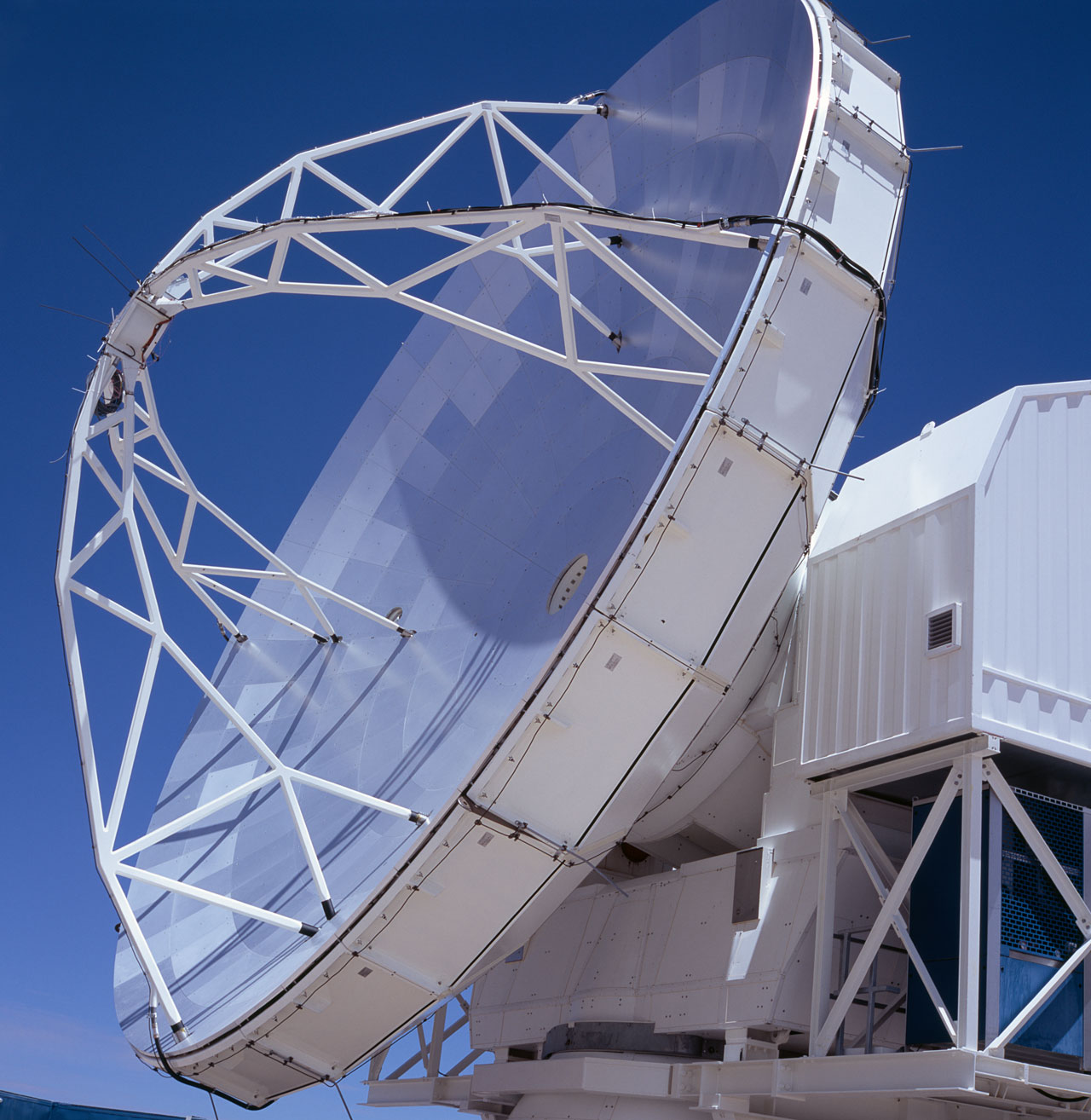
Image: The APEX Telescope, Chajnantor, Chile. Credit: J. Vieira/APEX (MPIfR/ESO/OSO)

I am going to have so much fun with this, and as a blogger, my role is to make the science "fun and engaging" for a whole new generation of non-sciency people!

I could have gone with any of:-

Blondes in Space!
Hair Salon at the end of the universe!
So long and thanks for all the perms!
The hairdresser's guide to the galaxy!

Photo Credit: Newfreephotos.com

Ah.....where do I start.

Reece Witherspoon in Legally Blonde, showed us how important it was, - you can win lawsuits with a good knowledge of haircare products.

Australian cricketers know they are about to loose the Ashes when the English cricketers start spending more money on hydrogen peroxide - yes those blonde tips. There is a mathematical relationship between confidence and expenditure on hydrogen peroxide.

However, life on this planet depends not just on a good stylist, hydrogen peroxide also plays a key role in the chemistry of water and ozone in our planet’s atmosphere. Ozone protects us from harmful radiation, but can fluctuate in our upper atmosphere and this chemistry is widely studied here on earth. So want about Space - is it out there?

Submillimetre astronomy is a relatively unexplored frontier in astronomy and reveals a Universe that cannot be seen in the more familiar visible or infrared light. It is ideal for studying the "cold Universe": light at these wavelengths shines from vast cold clouds in interstellar space, at temperatures only a few tens of degrees above absolute zero.

The European Southern Observatory (ESO) today announced
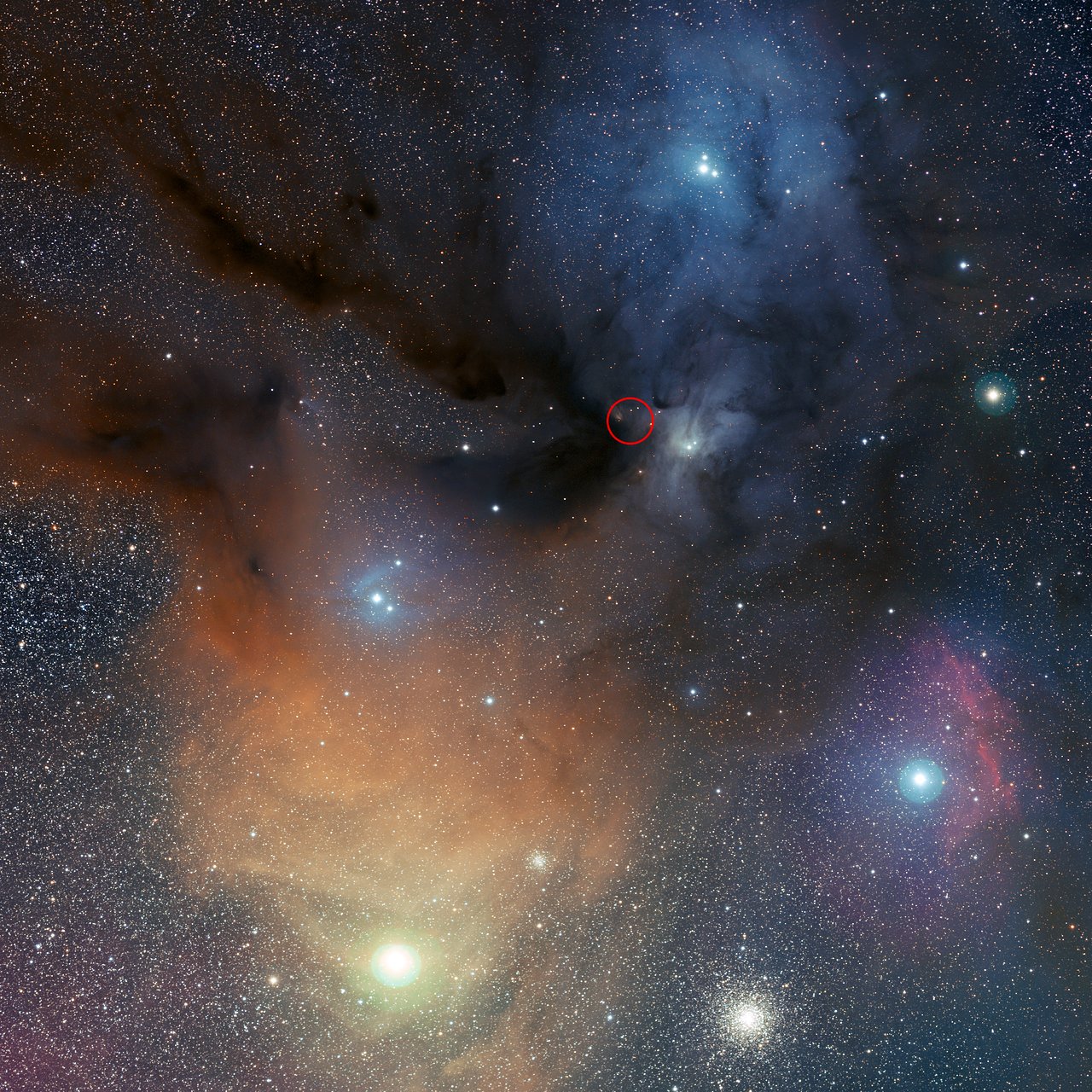
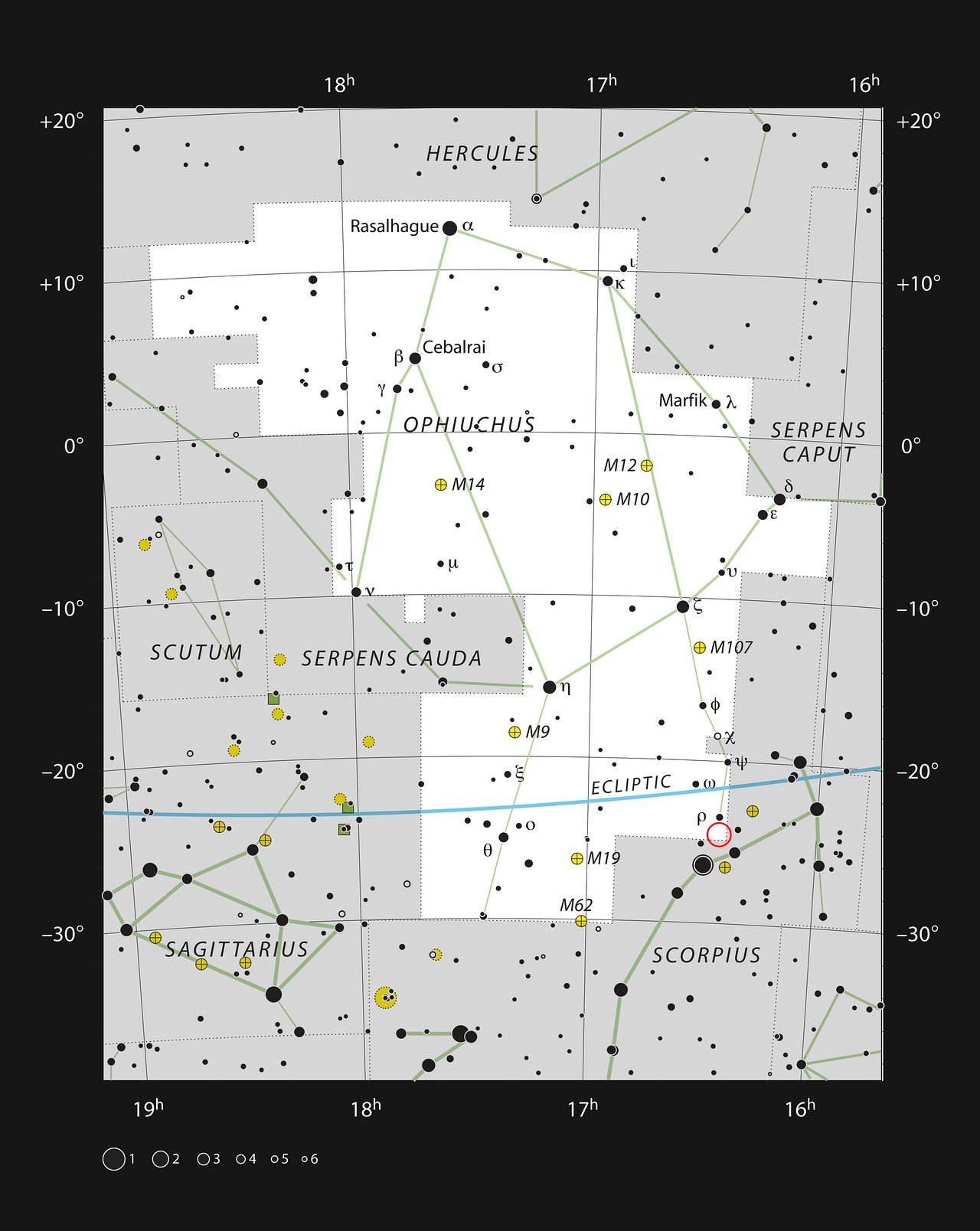
that astronomers had detected Hydrogen Peroxide - H2O2 in a gas cloud in our own galaxy, near the naked eye star, Rho Ophiuchi in Ophiuchus. This is a beautiful area of the night sky instantly recognizable by keen astro-photographers.


Image Credit: ESO/S. Guisard (www.eso.org/~sguisard)

How did they do that - flux capacitor hooked up to a hair dryer?

An international team of astronomers made the discovery with the Atacama Pathfinder Experiment telescope (APEX), situated on the 5000-metre-high Chajnantor plateau in the Chilean Andes. They observed a region in our galaxy close to the star Rho Ophiuchi, about 400 light-years away. The region contains very cold (around -250 degrees Celsius), dense clouds of cosmic gas and dust, in which new stars are being born. The clouds are mostly made of hydrogen, but contain traces of other chemicals, and are prime targets for astronomers hunting for molecules in space. Telescopes such as APEX, which make observations of light at millimetre- and submillimetre-wavelengths, are ideal for detecting the signals from these molecules.

Image Credits: ESO, IAU and Sky & Telescope

Now that is one serious telescope, APEX is a collaboration between the Max-Planck Institute for Radio Astronomy (MPIfR), the Onsala Space Observatory (OSO) and operated by ESO.

We were really excited to discover the signatures of hydrogen peroxide with APEX. We knew from laboratory experiments which wavelengths to look for, but the amount of hydrogen peroxide in the cloud is just one molecule for every ten billion hydrogen molecules, so the detection required very careful observations,” says Per Bergman, astronomer at Onsala Space Observatory in Sweden. Bergman is lead author of the study, which is published in the journal Astronomy & Astrophysics.

ESO, the European Southern Observatory, is the foremost intergovernmental astronomy organisation in Europe and the world’s most productive astronomical observatory. It is supported by 15 countries: Austria, Belgium, Brazil, the Czech Republic, Denmark, France, Finland, Germany, Italy, the Netherlands, Portugal, Spain, Sweden, Switzerland and the United Kingdom. ESO carries out an ambitious programme focused on the design, construction and operation of powerful ground-based observing facilities enabling astronomers to make important scientific discoveries.

Hydrogen peroxide is thought to form in space on the surfaces of cosmic dust grains — very fine particles similar to sand and soot — when hydrogen (H) is added to oxygen molecules (O2). A further reaction of the hydrogen peroxide with more hydrogen is one way to produce water (H2O). This new detection of hydrogen peroxide will therefore help astronomers better understand the formation of water in the Universe.

So why all the fuss you ask?

We don’t understand yet how some of the most important molecules here on Earth are made in space. But our discovery of hydrogen peroxide with APEX seems to be showing us that cosmic dust is the missing ingredient in the process,” says Bérengère Parise, head of the Emmy Noether research group on star formation and astrochemistry at the Max-Planck Institute for Radio Astronomy in Germany, and a co-author of the paper.

The new discovery of hydrogen peroxide may also help astronomers understand another interstellar mystery: why oxygen molecules are so hard to find in space. It was only in 2007 that oxygen molecules were first discovered in space, by the satellite Odin.

Congratulations to the international team on another great, exciting discovery, using the ESO/APEX telescope at Chajnantor.

So I'll sign off with - do Astronomer's really have more fun? Absolutely!

Monday, May 16, 2011

Comet Elenin in "oncoming traffic"!!!


Update 23/5/2011
The moon is now wanning and I have re-visited Elenin on the 23rd to see how it is after the moon has passed through. This color composite image is stacked once to create a star layer, and again for movement of the comet, to get the coma nice and tight. The two layers are combined in photoshop with a feathered cutout in the star layer revealing the Comet layer behind. This is the quick and easy way of good color comet photos, given the comet is still pretty faint. The image is a one hour of RGB in 300sec subs, processed in Maxim DL (stack & combine) and Photoshop(curves and layers). If you look carefully you will see Elenin passing a tiny little distant Galaxy.
Enjoy!


Original Post.
The full moon is not the best time to be imaging comets - but what the hell! I had a focal reducer fitted to the planewave this week taking it down to F/4.4 so I had to shoot something to try it out.

Here is the latest image of comet Elenin, May 16th at 2011-05-16 03:54:21 UTC, this time in color. I was processing the images and noticed a couple of asteroids very close which certainly made it a worthwhile exercise, even if the images were a bit noisy from the full moon.

This image is 5 x 300 secs of each color R/G/B color combined. Each image tracked the movement of Elenin, thus trailing the background stars slightly in each color.


Passing in the opposite directions across the plate are Asteroid Zoya (1793) at Mag 15.9 and (7503)1996 VJ38 which appears to have "crossed" the (apparent) path of Elenin perhaps about 8-10 hours before my images photos were taken.

Also when the moon is bouncing around it will often give extra highlights to dust donuts that flats normally remove when its nice and dark.

Enjoy!
Astroswanny

Tuesday, May 3, 2011

Comet Elenin


Here is the latest image of Comet Elenin, trying to sneak past the little blue green planet with out becoming involved in any doomsday conspiracies.

It is expected to be quite a show later in the year, if it survives it's perihelion approach to the sun.

Caught here on May 3rd, its sporting a short tail, at the expected brightness around roughly 13 (I haven't done any specific photometry on it).

Astroswanny

Sunday, March 13, 2011

FS Aur Video

As you all know I have been helping Dr Vitaly Neustroev with his research on FS Aur. This is a very erratic variable star that can vary in magnitude by up to 0.2m over an hour, has a number of interacting periodic cycles, and goes into outburst every 13-15 days.

Whilst this video doesn’t really do justice to all the hardwork and the more subtle variations, it none the less is a bit of fun to show you what we have been looking at.

The timescale is a very rough 1 sec = ~2 days.


Enjoy!!!!

Astroswanny

Wednesday, October 7, 2009

Variable stars and the discovery process

The weather has been kind this week allowing a return to varibale star observations. This week I will take a look at the discovery process for new variable stars, as this week I had reason to understand and work through it due to detecting what appears to be a new variable star that has not been previously listed.

Discoveries of variable stars are normally a specific targeted activity, from either a target list of suspected variables in a particular constellation, or by star type researching the characteristics of the variables. Teams of astronomers usually collaborate over many observing sessions to gather data and write up their findings in a science paper that is then published in one of the journals. One such paper was published only this week by Alex Golovin, Kirill Sokolovsky, Natalia Virnina, Javier Lopez Santiago - Three new Variable stars in Indus. The purpose of such papers is to provide data, classification information, star temperatures, period of variability, and assist scientists understand the behaviour, age and characteristics of these stars.


In 1844 the german astronomer Friedrich Wilhelm August Argelander appealed, "I lay these hitherto sorely neglected 30 variable stars most pressingly on the heart of all lovers of the starry heavens" spawning the study of variable stars by professionals and amateurs alike. Over the past 160 years years the list has grown north of 30,000 with another 15000 suspected of being variable. Due to the massive number of variable stars and the limited number of observers, alas many still remain neglected.

Today we know there are two types of variable stars (and I don't mean one of those amusing bumper stickers - those that are and those that aren't). The two types are intrinsic and extrinsic - ie variability within the star and variablily external to the star. The stars then fall into a number of classifications related to the behaviour within these two types.

Observation and studies of variable stars are directed at identifying the characteristics to determine these classifications, and then determine the behaviours of these stars in order to better understand the context of the stars lifecycle.

The Hertzsprung-Russell diagram is the current collective knowlege of stellar lifecycles, individual star types are referenced here but things get more complicated when some of these stars (of different types) orbit around each other and start interacting and exchanging their elements and debris. This can lead to very sudden changes in brightness and evidence of a catalysmic variable. [This is one example of an extrinsic variable. - EDIT Actually whilst that might sound like extrinsic behaviour its still intrinsic as in the case of Dwarf Nova the accretion disk collapses onto the star and then its brightness changes intrinsicly - Thanks Sebastion]


Image courtesy of CSIRO ATF Outreach
Anyway, I am starting to sound as about exciting as a live video broadcast of the visible debris cloud in the LCROSS impact......so I'll return to my story.

One other way discoveries are made is when observers are participating in an observering campaign, and whilst processing data they find something and say ..... "hang on what going on over here". Many discoveries in all disciplines of astronomy are made when you find something a little unexpected whilst observing something else. Even amateur astronomers become curious and just have to know why!!!

This week I found myself in such a situation. Using the great photometrica tool (the poster child for "astronomy cloud services" ie photometric analysis as a webservice) I was processing data on V4743 Sgr a Cataclysmic Variable that last went into outburst in 2002. When I had finished, I hit the "what else is varying in this field" button and was presented with a list of about 40 stars to inspect. I knocked out all the stars that had a double star in the annulus, knocked out all those with a SNR less than 100 and bingo I had three left. All had brightness changes that were much larger than the standard deviation of their comparison stars (first point of interest) and demanded closer inspection. One of those had a small asteroid/or hot pixel drifting past through the annulus and across the sky background....AHHH!!! more stuff to check...... (second point to always check for transient artifacts/objects). Back to my top candidate, a Mag 14 Star, I could see a clear straight line variation of about 0.4 magnitude in just 30 minutes of imaging time (third point of interest), I quickly reviewed some other data of the same field and reprocessed all the data in a different software program - Maxim DL, and bingo! (fourth point of interest....got the same result).


So like any good AAVSO member.....contact your mentor and say "What do I do now"?

The reporting of a variable star discovery is an interesting process, one I was about to learn. Whilst an exciting event for the observer and very satisfying, its not one that leads to Hubble time and NASA press conferences. None-the-less it is scientifically interesting.

The International Variable Star Index is the body that administers this process. There is an 11 step process to enter the data required: Position, all known identifiers in the various star catalogs (2MASS & UCAC3 etc), the magnitude, the amount of variability (Max/Min Mag), variable star type, the period of its variablility, a light curve and a phase diagram. The final data point is any published jounals listing research data on your discovery(example as per Golovin, Sokolovsky, Virnina, Santiago mentioned above).

If you make a report to the variable star index all this information is vital, as to have your discovery reported and confirmed it needs to be varifiable by others, and available for peer review.....thus the onus is on the discoverer to present the data that needs to be reviewed. Over the next couple of nights I collected additional data and prepared my submission. As this was the first time I had been through the process, and being very much in the AMATEUR Astronomy camp, I was very nervous about the process. Its always important to follow the process and accept the feedback that comes from those with much more experience than one's self.

I received back a very helpful email that rejected my submission (for now) due to the fact that I didn't have enough data to produce a full phase diagram and I had suggested that it may be a Cephid Variable due to the short period and hadn't considered that it was a bit too blue to be a Cephid and that it was more likely a RR-AB. The VSX person made some very helpful suggestions about what I should do next - get some more data and produce a full phase diagram and re-submit.


As you can see from my light curve there is nowhere near enough data to create a phase diagram, as my observing runs were of short duration.

So nothing to report yet, other than there is a little variable out there throbbing away with a period of a couple of hours and varying by about 0.9M just waiting for my next visit. Once I have the period length I can then re-submit and rally some other observers for follow up. Again, the most important learning has been that the the period is important as others need to know what to look for, so they can plan their observing campaign.


So in the spirit of Argelander's appeal, at 9pm tonight, I will return and ensure my little variable doesn't end up on a list of "hitherto sorely neglected" variable stars.

UPDATE: 16/10
Still chasing data, missed a couple of nights due to bad weather and now my little star is escaping into the western sky. Here is the Phase Plot I referred to....as you can see this is still a bit out and I need a lot more data. At least you can see what I need here, to calculate the period.


Clear Skies!!

Saturday, September 26, 2009

When you wish upon a star

Welcome. This week has been characterised by some fairly average weather. Those of you tuning into Australia's premier football event around the world this afternoon will see plenty of our famous Melbourne weather on show.

Weather can have an impact on an observing campaign, so there have been some challenges in obtaining some of the data I have been chasing this week. I am getting great positive feedback on the blog - largely because I am blogging on my observations.

So this week, given the weather, I thought it would be good to talk about observation campaigns. This week I have barely jagged a couple of short sessions on
V4743 SGR and some of the surrounding variables in the same field. V4743 Sgr is also referred to as Nova Sgr 2002c making it an object of some interest, given its nova outburst in 2002. Over 200 observers have contributed to the AAVSOs lightcurve.


So what is it that makes an object "interesting"? Clearly a Nova outburst is something that is interesting, as professional astronomers are quick to follow up with highly accurate spectroscopy. The advantage of having amateurs "on their toes" and participating in regular campaigns is that professional astronomers can't afford to have billion dollar telescopes pointed at stars, waiting for years, for something to happen. (The hubble deep field shot is a noteable exception...but a deliberate experiment to look at nothing to see if something WAS there)

A good example of leveraging the skills of amateur astronomers is my data here on QU Sgr. This is a Mira variable star of little or no interest to anyone.....but who knows one day it may be significant or do something. If that ever happened, what would we have to compare it with? So whilst gathering some data on V4743 with my set up which has a fairly large field of view, it is important to grab a couple of readings on any other Variables in the field, as other observers are unlikely to ever go specifically to QU Sgr to collect data.


There are a plethora of variable stars requiring regular observations and a limited number of observers. Today we have the fantastic use of social networking, blogs, forums and membership of organisations such as AAVSO. In this environment connected communities of dedicated amateurs have organised campaigns based on a prioritised list of "interesting objects".

Rod Stubbing who discovered this months outburst of VX For was working through a carefully targeted list of variables that were "in season" ie at an optimal position in the sky for observing. Rod indicated to me it was his first observing session on VX For for the year. So you never know what you will find, and how many other people who are observing.


So I leave you this week with the completely insignificant Mira Variable QU Sgr that noone else has reported on for over 4000 days.

Wednesday, September 16, 2009

VX For Dwarf Nova Outburst .....update#2

The variable Star community is alive with excitement after Rod Stubbing an amateur astromomer from Victoria Australia discovered VX For in outburst for the first time since 1990.

After a 19 year spell the Dwarf Nova has moved into outburst. Importantly Rod appears to have caught it before its previous peak of 12.5 in 1990.


I was able to get some photometery on VX For and reported confirming data on Rod's exciting find to the AAVSO.

Mike Simonsen has written an excellent blog on this star with some of the history and the significance of the event. I imagine professional astronomers will be keen to get some spectroscopy on this interesting star in over the next month.


My observations were just a short run last night as the window is fairly tight from about 11:30Pm local time through to about 4:30am. The co-ordinates also restrict viewing to southern observers: RA 03:26:46.9 Dec -34:26:37.0 so our northern friends will have to leverage any access they can get to southern hemiphere scope......its called teamwork! Also Joe at the Center for Backyard Astrophysics is following the story with interest and rallying the troops!

Anyway it promises to be an exciting time as VX For entertains us for the coming weeks. My first light curve showed it right on the 13.0 magnitude observed the previous night by Rod Stubbing. Amateur Observers can post their results to the AAVSO.


Enjoy! I will post any further updates, you can also follow the light curve here as it develops.

Sunday, September 13, 2009

HD Video of M17

The array of desktop tools available to the home user today is nothing short of amazing. HD Video editing packages, access to media sharing sites like Youtube and social networks, and a market place of over a billion people.


The notion from the 60's of Governments allocating Radio and TV broadcasting licences seems positively ridiculous, compared to today's media rich world.

Anyway, my little contribution for today - A short HD Video tour of the M17 Nebula, following up my earlier post this week.


Of course one of the little quirks of Newtonian astrographs is they view everything upside down. So for those of you still looking for the Swan....try this way up! However my son said "thats not a swan thats a Dingo"! (if the white bit is the gnarling teeth and the black patch the nose then.....ah....yep....there's a dingo in there too, perhaps even a crocodile!!!! Maybe why this fine emission nebula has more than one name.


Enjoy.....Cheers
Peter

Thursday, August 27, 2009

Comet 217P/Linear

Excited comet watchers have been following with interest the prospects of Comet 217/P - Linear.

Comet hunters have been following it since David Cardenosa from Bootes Observatory in Spain (J05) reported some outbursts on the 22nd.

My Obs from this morning from D90, whilst I was tucked up nicely in bed asleep.....ah the joys of remote astronomy.

217P C2009 08 26.75348 03 49 59.73 -03 11 43.7 14.05R D90
217P C2009 08 26.75433 03 49 59.90 -03 11 45.5 13.78R D90
217P C2009 08 26.75519 03 50 00.16 -03 11 46.0 13.21R D90
217P C2009 08 26.75603 03 50 00.30 -03 11 46.0 13.70R D90

The comet looked a treat at about Mag 10.8 based on nearby catalog stars. It certainly makes a pretty picture passing those two deep sky galaxies.


As you can see its still holding together reasonably well, although does still have a slightly "out of shape" coma.

From the very useful online application Photometrica you can see the 3D shape of the coma.


Closer inspection shows a similar profile to what our Spanish friends observed.


I am still to download all the files, so maybe more later.

Musically reflecting on this, 217P is proving the time honored truth....."breaking up is hard to do."

UPDATE: I have downloaded the rest of the photos and done a 20 x 20 Sec stack.

Sunday, August 16, 2009

FMOs - Fast Moving Asteroids

Things move along at a fairly fast pace in the space time continuim.

Our little blue green planet moves along around the sun and travels even faster with reference to the cosmic background radiation. So next time someone asks you how fast you can run, you can say "almost as fast as Usain Bolt so long as you use the cosmic background radiation as the reference point not the finish line".

Ah I digress....so what constitutes fast is an interesting discussion you can have for many hours over a glass of red wine.

From the reference point of earth most Asteroids are found in a number of "belts" between the orbit of Mars and Jupiter and of the roughly half a million discovered currently only 1067 occasionally wander into our neighbourhood. These are classified as PHAs and are defined as Asteroids that have a minimum orbital intersect with earth of <0.05 AU (1AU is the distance from the sun to the earth).

The Minor Planet Centre, International Astronomy Union, Spacewatch and NASA JPL lead the charge in identifying and tracking asteroids, after setting a goal in the 1990s to find 90% of the Asteroids larger than 1Klm within 10 years.

Whilst Astronomers from the LINEAR, LONEOS, NEAT, and the Catalina Sky Survey, do the bulk of the legwork in the northern hemisphere, the Uppsala Telescope at Siding Springs in Western New South Wales, bats well above its weight in covering a good portion of the southern sky.

The Telescopes at Moorook D90 are well postioned to do quick follow up work for the professional Astronomers.


Fast moving asteroids are classed as FMOs, which by virtue of their speed usually mean they are fairly close to earth. Most however are relatively harmless as they are usually very small. The fantastic advances in technique honed over the past two decades, and the better technology now available means that asteroids as small as 4 Metres are regularly detected in the surveys.

On the 14th Aug E12-Siding Springs Survey on the Upsala Telescope detected object 2009 PR1 a 42m near earth object which zipped past earth at 7.9 Lunar distances on the 12 August.


The author captured this shot (above) shortly after it was posted on the MPC Confirmation page.

FootNote:
This Blog is posted as a tribute to all those hard working folks in the Asteroid watch programs around the world.

Friday, July 31, 2009

Double barrell action at Moorook

Well it been a busy week for AARTScope, whilst the weather has not been particularly favourable, the Australian Amateur Research Telescope (AART) & G11 on Global Rent-a-scope was commissioned on the 19th July and has already made a significant contribution.

Global Rent-a-Scope now has two 16inch scopes online at D90 Moorook. Both of these "light cannons" made a significant contribution during the week.

On the 22nd, using G11 (AART) Norm Falla of the UK, not satisfied with England whipping Australia in the cricket, managed to capture Asteroid 2009 OD3, and at time of writing currently has the discovery credit. MPC have not yet issued an MPEC on 2009 OD3.


Then on the 23rd, Kevin Hills using G6 was able to provide confirmation data on Robert McNaught's discovery of asteroid 2009 OB3 as detailed in MPEC-O28.

Its great to see the two new 16inch scopes in action at Global-rent-a-scope performing great science.

So after a busy first week grabbing some nice astrophotos and some great science, I am even more excited about the vision of "Creating the sense of anticipation and discovery that keeps scientists asking questions...".

Update:
Astroswanny was interviewed on Astronomy.FM on August 4th.

2009 OD3 hasnow been linked to previous Objects 1994 PZ35 & 2008 GL16. Congrats Norm on a great recovery on the 7th Opposition since 1994.

Search

Custom Search