Tuesday, October 26, 2010

Faster meets further!


Technology is awesome. It constantly amazes us, the shiny, the newest, the sleekest, the most advanced, the greenest, all point to our fascination to push the boundaries.

Human ingenuity, vision, ideation, all drive each of us in different ways. Passion and emotion often over-ride commonsense and process. Fast cars, expensive toys, remote destinations, are also often the domain of James Bond films.

So trick question.......what do fast cars, great design, astronomy and James Bond films have in common........
P A R A N A L !!!!!


The European Southern Observatory (ESO) tapped into all of these emotions with a unique blend of the fastest and the furtherest, an electric super car and the world's most productive optical telescope - both impressive structures that evoke our emotion and passions.

So some history here for the movie buffs may assist set the scene.

Who could forget the Aricabo Radio Telescope arising out of the "CGI lake" in the James Bond movie Goldfinger, water draining away every where, only to contact a satellite to laser a few cities before being blown to bits by the hero and his beautiful assistant.

Then more recently in Quantum of Solace with Daniel Craig in the lead role - Superspy meets beautiful woman, and on their first date find, yet again, another evil villain holed up in a Telescope control room that must be instantly dispatched with lots of special effects. Is it any wonder that astrophysicists are developing a complex and have to watch "Big Bang Theory" for therapy. Quantum of Solace (a very "sciencey" name) was filmed at ESO's Paranal site.


Daniel Craig described Paranal as "a very special place" and that goes some way to highlighting why you might find a group of telescopes there. The structures of Telescopes are imposing, impressive and unique and provide the essential backdrop for the action scenes in action movies.

Now when we talk about renewable technology, we are not talking about billion dollar telescope sites be blown up on James Bond film sets and then being open for the pressing business of Astrophysics the next day......but Mr Bond does likes his fast cars - now he can have an electric one.

The supercar, has also often drawn the same emotions out of the alpha-male, though this time its not the "racing green color" but racing green endurance. This week the ESO brought them both together for a unique opportunity.

Speed versus distance.

There they were - two pieces of highly advanced technology side by side in all their glory. The worlds fastest ELECTRIC supercar and the most productive ground based observatory. The "renewable" film set and the renewable energy super car. Enough of the parallels and metaphors.....it was just plain gorgeous!!


The ESO team described their exciting day as follows: "The SRZero electric supercar arrived at Paranal on October 27 after touring the Pan-American Highway from Alaska's Prudhoe Bay and on their way to Ushuaia. The Racing Green Endurance (RGE) adventure could not have been complete without a stop at Paranal, where the RGE team had the opportunity to observe the fascinating southern skies under the best conditions and test the supercar’s limits by performing at an altitude of 2600 metres above sea level."

So what's the science angle here. The ESO also today shared some of their finest work "on wheels" with some of the deepest ever images of spiral galaxies taken with the HAWK-I camera on the VLT (very large telescope). These infra-red shots of these very distant spiral galaxies weren't just released to seed inspirational new designs for mag wheels for super cars, they also show the various types and stages of galaxy development. HAWK-I stands for High-Acuity Wide-field K-band Imager and is highly sensitive in the infra-red range.


So this week we saw the best set of wheels on earth and in the heavens. Thanks to the folks at the ESO and their imaginative marketing, drawing our attention to the best of breed technologies, and tapping into our passion for the shiniest, boldest, and contrasting it with the grandest and most majestic.

Photo Credits: ESO/ H.H. Heyer
ESO/ Glenn Arcos & www.racinggreenendurance.com
Source ESO Used with permission.

Thursday, September 9, 2010

Congrats Ernesto and Giovanni

Well folks. G11 has now relaunched with brand new Planewave 20inch CDK.

What an amazing piece of technology. Able to carry effortlessly a 6 kg camera assembly and a 12 position (50mm) filter wheel, it's is a stunning telescope. The Ascension mount is so precise it can handle 300 sec unguided images with great precision.

Daddy hasn't had much time to play with his new toy yet, and a recent change of PCs on the home network means I'm still re-installing image processing software as well.

However not to let the side down Ernesto and Giovanni have claimed the first science credits on the new scope!!!!!

Last night they captured one of the two asteroids that zipped deep inside one lunar distance. In a stunning 4 sequence animated gif file they show 2010 RF12 zipping past the earth at an MOID of 79000 at 6klms per sec.

Both asteroids were fairly small and slightly larger than 2008 TC3 that landed in Sudan in October 2008.

Wednesday, June 16, 2010

Carnival of Space 158


[GEO Code personal Welcome]


Its been a while since I hosted the Carnival - No, I haven't been hiding away on a tidally split blue-green planet held together by carbon nano-fibre tree roots. Not wanting to open a "Pandora's box" ;-), I've just been busy. So thanks Fraser for appointing an Australian host for the Carnival in the week Hayabusa touches down in the Australian Desert.
[Image: Flight path of NASA DC-8 Hayabusa re-entry observation mission.]

If you are new here, a “Blog Carnival” is a whistle stop tour of Blogs around a particular community of interest – in this case Astronomy and Space. It features the best and most interesting highlights of this week’s blog posts from the contributors to the carnival. The purpose is to share, develop, encourage and network with those of a similar interest. For back-issues of earlier carnivals click here. If you’ve got a space-related blog, you should really join the carnival. Just email an entry to carnivalofspace@gmail.com, and the next host will link to it.

Its been a big week for Japan with "three from three" in as many days. Ikaros deployed its solar sails, Hayabusa made it all the way to home base and to top things off - Japan had a great win over the powerful Cameroon football team in the World Cup.


This week AARTScope ran a live blog of the Hayabusa return with over 200 visitors dropping by to check-out the live action. So lets start this week with Space Missions.

Space Missions!
Cheap Astronomy among other things, produces high quality Podcasts, and this week Steve Nerlich gives an extensive preview to the return of Hayabusa covering the full seven years of the mission.

Brian Wang from Next Big Future Blog covers the
"inverse origami" of unfolding and deploying the IKAROS solar sail as thin as spider silk.


[Youtube Video from the JAXA Channel]

Bruce Cordell's 21st Century Waves doesn't "drop the ball" by asking "Can the UK Lead the New Space Age?" [For those who hate Football - my last world cup gag].

Aron Sora seeks to create a paradox on Habitation Intention by suggesting we need a reverse doomsday clock tracking how far away we are getting from being a Space fareing society. A bit of thinly veiled activism. I love it!!!

Adam Crowl at Crowlspace does the math on the business case for Space Based Solar Power. The thinking seems to be gather the power in space then transfer and distribute on the ground.

Every organization/industry needs to learn and develop. Part of that journey is having a strong organizational memory. David Portree editor of Beyond Apollo and Beyond Shuttle makes a strong contribution to our organizational memory of space missions by carefully documenting the historical evolution of various space programs. David meticulously traces the decision points and tension between politics and science through out the journey. Some of those decisions sound vaguely familiar and relevent today. This week David covers the evolution of space station design throughout the 60s and 70s, the roadblocks and decision points and challenges along the way. Can you spot how many of the McDonnell concepts have made it through to today's Space Station.

Finally in Weird Sciences, Bruce Leeeowe known for his "theoretical approach to the space dimension and extraterrestrial life", discusses what every mission planner needs to know - the best contingency plan if you should encounter the scenario where your Spaceship's warp drive core is declared irretrievable. Bruce uses known science to push the boundaries of what just, might, be possible.....one day! Bruce also has a post that asks the question - "How old could entities be?"


[Youtube Video: NASA's video of Hayabusa "mothership" and landing pod re-entering the atmosphere]
l
Hayabusa was the highlight of the week and actualy lived up to the expectation, which now brings us to Hard Science.

Hard Science!
Nancy Atkinson, Senior Editor of Universe Today, continues the Japanese theme, discussing some of Shimizu's mega space projects. The Japanese Space community have clearly demonstrated their ability to achieve amazing results......what are they thinking of next?

Paul Gilster's Centauri Dreams Blog covers the amazing latest research on β Pictoris produced by the ESO team. Not sure what is more exciting - the findings or the capabilities of ESO's Very large telescope and the Adonis instrument.

David Bigwood presents a a collection of images from the Lunar Planetary Imager....some great potential screensavers and desktop backgrounds among them.


The Chandra X-Ray team at Harvard celebrate the life and research of Geoffrey Burbidge and the legacy of his research on the enormous energies involved in violent events in gallactic nuclei. They also present a new image of CH Cyg that is fascinating, as it maps color data from three different telescopes to RGB creating an amazing insight into the behavior of CH Cyg.

Social Scene!
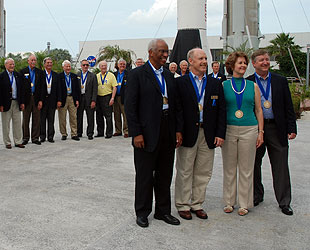
Robert Pearlman, Editor of CollectSPACE, puts on a Tuxedo to cover awards ceremony that appointed four new inductees to the US Astronaut's Hall of Fame.


Thanks for joining us for Carnival of Space #158. June 16 2010.

Friday, June 11, 2010

Desktop Guide to Hayabusa Re-Entry

I'm sure you have all seen those massive rooms with walls of electronic displays like the NASA Flight Control Room. Ever dreamed of being a mission controller and having all that data at your finger tips?

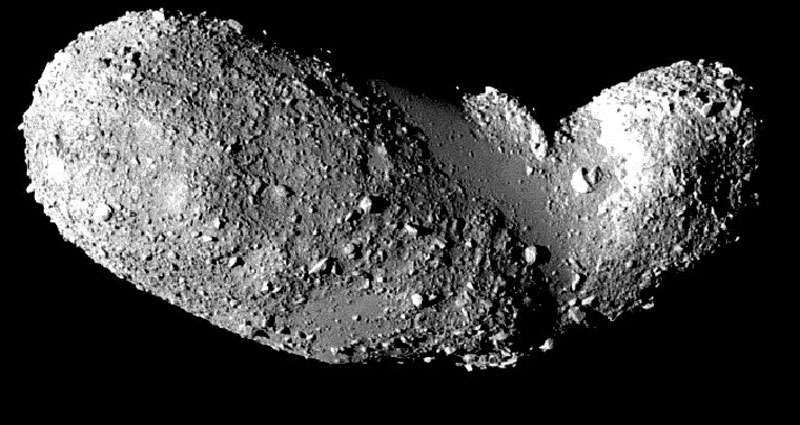
This weekend is a long weekend in Australia and a very special event is occurring! The Hayabusa Spacecraft is returning to its home planet with samples from Asteroid Itokawa. Keeping it all in AsiaPac, JAXA, the emerging Japanese powerhouse of space projects, has selected the Woomera Restricted Area for a landing and recovery zone.


I am watching the whole thing with extra interest as if it overshoots it might land on my telescope! ;-)

Anyway I digress (as usual).

Today I thought I would share with you how to set up your own mission control room so you can watch all the action unfold. TV is boring anyway as its largely re-runs of shows and terrible ads, whereas the internet is a seething mish-mash of live breaking news, particularly since the advent of social networking. So here, step by step, I'll describe how you can set up your own Mission Control Centre.


Special Equipment:
1) Leather recliner
2) 46 " Plasma
3) PC/Computer
4) Wireless Mouse in the USB port

[Seriously, I have actually done a full test plan on this]

What to do with above Equipment:
1) Open 5 windows
2) Window #1: Open Url http://www.trendmaps.com and search on #Hayabusa and or follow @Hayabusa_JAXA for live updates in Twitter. Trendmaps will enable you to see what everyone else is saying in the twitter feeds that include #Hayabusa.
3) Window #2: Open Google Translator for Japanese to english translations (The Aussies are not the only ones excited about Hayabusa).
4) Window #3 Of course you will need the latest updates from my blog http://aartscope.blogspot.com (I am hoping for a live reporter, if I can find one).
5) Window #4 You may want to have the Mission Page up for any updates http://hayabusa.jaxa.jp/e/index.html
6) Window #5 Nasa has flown an entire flight crew to man a DC-8 and attempt to film the re-entry and stream it live Here: http://airborne.seti.org/hayabusa/ Knowing how carefully NASA plan things I'd say the chances are "better than average" there will be something to see.
7) Plug Laptop PC into your large screen/Plasma/LCD/ Brand spanking new LED TV with 3D (Ok now we are going a bit too far).
8) Arrange Windows on screen so you can see them all - re-size the windows to suit.
9) Use wireless mouse to refresh screens that don't feed.
10) Pour glass of preferred beverage and relax and watch the show!!!!!


Re-Entry is at Sun 13th around 23:22 local time (around 1300 UT to 1400 UT should cover most of the action) when the tiny spacecraft will glow at an estimated magnitude of -5 (brighter than Venus) as it passes through about 100Klms up. If you are fortunate enough to be at least 500 kilometers away from the nearest Port Adelaide AFL game, then you may well be in the vicinity of Glendambo, SthAus where it is expected be briefly visible about 30 degrees above the NW Horizion.

Details on the descent can be found here: http://www.isas.jaxa.jp/e/enterp/missions/hayabusa/trj.shtml#new

So there you have it, get yourself a an anime thumbnail photo for your Social Networking Profile, brush up on your Japanese, set up your "Mission Control" screen and enjoy what should be a historic occasion.

LIVE BLOGGING and TWITTER UPDATES from Astroswanny from 1200UT.
http//aartscope.blogspot.com
http://www.twitter.com/astroswanny

Update: 12/6 09:34am
Hayabusa_JAXA have posted a lovely photo of the dark australian night (presumably from Woomera) Looks like they are ready to go.

Update: 13/6 09:08 PM
T -3 Hrs and counting. This afternoon the JAXA Team announced that Hayabusa would be faintly visible after sunset before the Satellite entered the earths shadow in the Maldives about 6 minutes before re-entry. Satellites are visible in early evening and before sunrise when they are light by the sunlight whilst still being visible in the "night". Details of the observation details in the Maldives - http://www.isas.jaxa.jp/e/topics/2010/hayabusa_obs3.shtml

Update: 13/6 09:27
Welcome everyone to tonight's coverage. In the last hours I have noticed a number of visitors from the US East coast, Japan, Europe (looks like somewhere near France or Spain) and Australian visitors in Melbourne, Perth and possibly the Woomera restricted area, or some really keen nearby desert dwellers ;-)
You can see the visitor on the "Revolvermap" one of my favourite webtools at the top of the page. NASA are yet to open up the server to their live broadcast.

Update: 13/6 09:39 (Local AEST UT +10 - in case you were wondering) Welcome Jakata!
OK then I'm all set - Laptop, iPad and a glass of Verdello and the Soccer on the TV Algeria and Slovenia has just started.


If you want to join the conversation RT @Astroswanny on twitter with #hayabusa_jaxa and #hayabusa

UPDATE: 13/6 09:55 pm
- Cool must see Geo Greeting....in a way only Google can!!!
http://www.geogreeting.com/view.html?yGovmywoUrywoUrkIklECka

UPDATE: 13/6 10:00
Hourly update. JAXA reported at 9pm that the lander successfully seperated from the mother ship. Twitter feeds following the action with heavy traffic are #hayabusa and #hayabusa_jaxa. About 1Hr 20mins now till anticipated touchdown.

UPDATE: 13/6 10:21
One hour to go. The Tweetsphere is roaring and there are over 20 concurrent visitors - A special welcome to the folks in a boat off the west coast of Africa!!! (or perhaps there's a tiny island there I can't see) - Just trying to get a fix on the NASA DC-8 You can flight track it here in Google Earth : http://airborne.seti.org/hayabusa/HayabusaFlightTracker.kml

UPDATE: 13/6 10:52PM
NASA DC-8 has been airborne for a few hours and is now approaching the observation area.


UPDATE 13/6 11:13PM Hayabusa should be over Indian ocean and visible over Maldives about now. NASA DC-8 making good progress to target area:


UPDATE 13/6 11:22pm Local Any minute now we should see announcement from: http://www.isas.jaxa.jp/home/hayabusa-live/

UPDATE: 13/6 11:42pm
Servers all running seriously slowly, can't raise the NASA feed, no offical news yet. Intrepid reporters in Japan having their own Hayabusa parties and streaming via Ustream: http://www.ustream.tv/channel/kalapattar


UPDATE: 11:50pm Looks like the NASA DC-8 made it into position, I couldn't contact the server for the feed, let hope they got what they came for!!!


Update: 11:53pm My Japanese is not good but there is lots of cheering and an photo from the NASA DC-8 it appears, lots of cheering!

UPDATE: 12:04am Our Japanese friends have cracked the champagne and are looking very excited. Thanks for everyone who has visited the blog. Join me early next week when I will be hosting Carnival of Space.


UPDATE: 12:08am <6月13日 22時57分(日本時間)発信>地上からカプセルの発光(火球)を確認しました。これにより、カプセルが大気圏に再突入したことを確認しました。Which if you followed the steps mention above ;-) you would instantly recognize as Re-entry fire ball confirmed!

UPDATE: 12:25am
JAXA broadcasting via Ustream and the Live Universe channel have captured the re-entry in spectacular video.

http://www.ustream.tv/recorded/7634995

Observer reports starting to come in PWB described it as a long slow shooting star in Alice Springs.

12:46 am -SIGNING OFF
- Well, no news on the science yet but that is about all we'll hear tonight I guess. First photos of the landing are in and show the spectacular fireball. Thanks to all the new visitors to AARTScope where our mission is to "help create the sense of anticipation and discovery that keeps scientists asking questions". I'll do another round-up when I host Carnival of Space tomorrow. The re-entry was observed as far away as Alice Springs by one of our guests at tonight's Live Blog. Please leave you comments and subscribe to the Blog and the Astroswanny TWITTER feed. Australia opens is world cup campaign in 4 hours so I better get some shut eye. CLEAR SKIES!!!!!

Saturday, March 27, 2010

The Data is in on New Zealand's 1st Space Launch

Rocket Lab's January newsletter carried some details of the first data-set obtained from the Nov launch of their first ATEA-1 rocket conducted at Great Mercury Island.


Mindful of the famous one-liner from Big Bang Theory - ".....and this is why Sweden has no space program", back in November, I blogged about the launch of a sounding rocket to see if that constituted the commencement of New Zealand's space program.

Whilst the world contemplates the implications of the Obama administration's cancellation of the Ares V Constellation program, and we consider the pros and cons of Nation/State Vs Private Sponsorship, I thought it would be timely to see what news there is from New Zealand.

Following the Nov 2009 launch of the ATEA-1 (a bio-fuel, low carbon, patented design, sounding rocket), a commercial fishing boat recovered the stage one booster 17 klms offshore recovering a vast array of data that could be analyzed.

The Rocket Lab team reports - "we are still reviewing the data, but initial findings suggest that the booster was providing the expected thrust levels at launch and showing good, stable combustion for the full burn-time, consuming all available fuel. The recovered booster also confirms clean separation of the second stage. Calculations from the raw data obtained confirm that the vehicle was on course for a nominal trajectory to over 100 kilometres altitude".


The newsletter also provides an interesting insight into the nimble, clever design innovations that are achievable from small private space programs that can clearly tap brilliant skill-sets, respond to the actual needs of the market, and come up with scalable and customizable solutions for an expanding customer base.

In particular they are surprisingly open about the features of their Avionics Flight Computer (SRA) - "The unit is physically incredibly small, fitting within an envelope 50mm diameter x 150mm length. The weight of the unit is a mere 250 grams including batteries. The reduction in size and weight of the unit is critical for improving the performance of sounding rockets such as Ātea-1. The unit is designed and tested to MIL-109-E shock and vibration tests and can handle up to 80°C ambient temperature.

The hardware consists of a low-power 32-bit microcontroller with RS232 output port and auxiliary expansion ports. It has 16-bit data logging capability, with an in-built Inertial Measurement Unit consisting of 3-axis accelerometers, gyroscopes and magnetometers. Onboard GPS is standard and it is designed to interface with a number of telemetry options including the Iridium satellite network."


I resisted the temptation to photoshop in a blue adult molar - in the words of another Sheldonism (Big Bang Theory) "...everything is better with blue-tooth" and that seems like the only thing that is missing. Perhaps in the executive model?

So AARTScope visitors, we await the next installment of the Rocket Labs success story, or as I like to think of it as - the New Zealand Space program. Clearly there is a much greater role for private space programs and sponsors as NASA maintains is game face in its latest Ares quarterly report.

Thursday, March 18, 2010

V842 Cen observations to support Hubble Cosmic Origins Spectrograph run

V842 Cen first came to attention in 1986 as a Nova and follow up studies by Warner/Woudt published in the journal of physics identified it as exhibiting similar behaviour to GW Lib. Thus both these stars are now the subject of Dr Paula Szkody's study using the cosmic origins spectrograph on the HST.

This observation task was somewhat more difficult than last week's effort as the variable star map coverage is somewhat problematic as there are few comparison stars of similar magnitude. However just 7 arcsecs and 20 arcsecs away are two known catalog stars that were selected for comparitive magnitudes. Which effectively places them close to the annulus/skybackground settings of Photometric measurement tools. At 1.22arcsec per pixel on my trusty FLI that's a tight shot!!!! Normal practice is to try and get the annulus to 2-2.5 times the FWHM of the star. So its tight!

Here at least I was able to adjust the annulus and the inner sky radius such that 0323-0709135 was kept away from the target calculation area. (ie between the two)

The image below I have zoomed in a little to illustrate the difficulty of the task.

One surprise was that the catalog star 0323-0709135 seemed to be a little brighter visually than expected. Instructions from AAVSO alert 418 indicated 0323-0709135 was expected to be slightly fainter than its near neighbor 0323-079110 at 14.88.

Either way V842 Cen appears to be 15.43 at my measurement which I submitted to the AAVSO this morning. I suspect the tightness of the shot and 0323-0709135 sneeking into 0323-0709110's sky background may have V842 Cen a little closer to 0323-0709135's magnitude than it actually is - you can see this in the photo.

Sunday, March 7, 2010

GW Lib data to support Hubble COS mission

One of the delights of being an amateur astronomer is being able to assist real scientists with (hopefully) useful data on various targets that they need to keep an eye on prior to observation runs with toys that I can't afford eg the HST.

An alert (Notice#417) went out this week from the AAVSO requesting data on two cataclysmic variable stars to support Dr Paula Szkody's upcoming spectrograph observations on the Cosmic Origins spectrograph on the HST.

GW Lib is a CV that needs to be fainter than Mag 14 when the mission takes place, and it has been known to infrequently outburst.

AAVSO members regularly fly cover and give early warnings on any unexpected events that may affect the mission integrity.

GW Lib is at DEC -25.00.25 so that immediately eliminates a good number of the world's telescopes. Australia has had large monsoonal lows pushing into the interior of Australia and the weather has been pretty ordinary this week as a result.


My choice of a couple of 300 sec images was a little short in duration as the SNR was a bit low with the moon still being at 55%. I was able to confirm that the target was about Mag 15.39 (given the low SNR maybe a little closer to 16) in the Johnson V filter (untransformed).

I'll try again tonight with a little longer exposure.

Peter

UPDATE: 10/03/2010
JD Airmass GW_Lib 147 143 Err SNR
2455265.209 1.11373 15.501 14.422 14.000 0.025 42
2455265.214 1.100 15.421 14.432 13.988 0.031 34
2455265.219 1.08756 15.514 14.422 14.003 0.041 26

Ave 15.479 14.425 13.997 0.032 34

Peter

UPDATE: 11/03/2010
Today I tidied up my Sequence a little, deleting 128 and I added 157 to the comp star list as visually it looked to be the identical magnitude to GW Lib. I also stacked the three images with a median combine to give a much much stronger SNR. With the SNR of a number of the comp stars now being over 100 (preferred) the Magnitude of 147 was almost identical to the chart magnitude listed in AAVSO chart 2084CCS. Comfortable with the improvement in accuracy GW Lib magnitude was measured at 15.629 (Johnson V untransformed).

Note the stronger SNR of the target now at 60 with the comp star's SNR >100.


Seven AAVSO members contributed observations and Dr Paula was pleased to hand the observations to the Hubble space controllers this morning who then gave the go-ahead for tonights UV run on the Cosmic Origins spectrograph.

Congrats to Dr Paula, hope everything goes well tonight! It all starts again on the 14th as the next COS run is on V842 Cen.

Search

Custom Search