Saturday, July 2, 2011

Carnival of Space - Episode 204


Welcome to the Carnival of Space where we feature the very best of Space and Astronomy blogs each week. Also, I thought I'd share with you the latest fancy internet widget from Infomous [above]. Check it out, but make sure you come back and read our great line up today, with lots of great Solar System articles, and entries from a number of Continents. As it hosted from Australia this week - lets start in Sydney.


Astropixie this week covers the Astronomy conference in Sydney "Supernovae and their host galaxies". The event was sponsored by the AAO Australian Astronomical Observatory and the CSIRO. Amanda provides overviews of the conference presentations, top of mind was the very recent Supernova in M51 and the methods of observation required after such events.

At the Next Big Future, true to form, Brian covers all the stuff our grandchildren will take for granted. Keith Henson's studies of space-based solar power issues. Henson recently published a proposal to reduce the cost of getting payload to orbit by orders of magnitude . In an interview with Sander Olson, Henson describes using skylon rocket planes to release payloads at high altitudes. Are launch costs of $100 per Kilo possible - Henson thinks so!

NASA Engineer John Chapman has an aneutronic fusion reactor scheme, a commercially available benchtop laser starts the reaction. A beam with energy on the order of 2 x 10^18 watts per square centimeter, pulse frequencies up to 75 megahertz, and wavelengths between 1 and 10 micrometers is aimed at a two-layer, 20-centimeter-diameter target. Each pulse of the laser should generate roughly 100 000 particles. Read the article and find out just how you might generate 1 Megawatt per second.

Moon Express, Inc. (MoonEx) is targeting mining the moon. CTO Barney Pell gave a talk about the vision recently. Sounds like its only a matter of time before we have protesters throwing themselves in front of space tractors. ;-)

Speaking of Moons.....Jupiter is just showing off. The Urban Astronomer reports on the discovery of two more Jovian satellites taking the total to 65! That's enough for whole inter-lunar football league, with enough left over for an Ice Hockey league! I can see it now....the Europa Enforcers! Seriously though, the new moons are S/2010 J1 and S/2010 J2 and are unusual, so you have to visit the blog to find out why.

Still on Moons, Enceladus - now there is a place you could play some serious Icehockey! The Meridiani Journal looks into further evidence that salty oceans exist beneath the surface feeding its famous Geysers.

[Image Credit: NASA/JPL/Space Science Institute]

Onto Mars now, and Vintage Space reports on Robert Zubrin and the Mars Society suggesting that we are more ready to go to Mars now than we were to go to the moon in 1961. A closer look comparing lunar readiness then and Mars readiness now suggests that maybe we aren't.

Enter these co-ordinates into your Stargate: SAO + NASM = FETTSS @ SI, or you can just go to the Chandra Blog for a great report on the Smithsonian Astrophysical Observatory and National Air and Space Museum's "From Earth to the Solar System" - a stunning photographic journey through the solar system. AmeƩ Salois even discusses iceskating on Europa (See... you thought I was being silly before!).

Photo Credit: Megan Watzke

The Panstarrs Blog covers some of their science strategies. Harvard postdoctoral researcher Darin Ragozzine describes the search for icy bodies in distant reaches of the solar system using Pan-STARRS1.

On a side note to this, the ubiquitous platform for Citizen Science - Zooniverse has added IceHunters to search for a suitable Kuiper Belt object for the New Horizions mission to go to after it passes Pluto. (So if you are bored with the ice at your local rink ..... alright enough on the Ice hockey analogies already!!)

The big news of the week, which made the mainstream media, was the close passage of tiny asteroid 2011 MD which passed at a very close distance of 1.8 earth Radii. Astroblogger provides commentary and discusses some of the images and techniques for capturing the near earth visitor.

Universe Today also covered Asteroid 2011 MD's approach. The article was linked by a number of main stream media houses. Senior Editor Nancy Atkinson also compiled a list of images here as well.

Ian O'Neil writing for the Discovery News asks the "what doesn't kill you makes you stronger question" protesting that he wished that 2011 MD had hit us, yes he's serious. He goes to great lengths to explain why - perhaps then there would be more serious funding from governments to address the problem.

Just in from our Spanish Desk: Vega 0.0 reports on the co-ordinates and skychart for observing Comet Elenin in October. Elenin is now a tough assignment as it is only about 30 degrees above the horizion at sunset.

Indian space entrepreneur, Susmita Mohanty gave a talk on the end of the Shuttle era at the American Center in Mumbai, India. Pradeep's Blog Pradx takes a look at the talk and the response from the Mumbai crowd. Thanks Pradeep, great to get some local news from Mumbai.

Weirdwarp poses the question, "What could an alien civilisation be able to do"? Well, as we have not found any alien civilisations then everything is guesswork based on the laws of physics and our experiences here on earth. This could be completely wrong or it could be completely right or it could be somewhere in between. Only Chris can stack rank an alien civilization!

Cheap Astronomy delivers a podcast, a highly summarized overview of astronomy at the various different wavelengths of the electromagnetic spectrum..

Finally I leave you with my own video of 2011 MD as we wrap up this Solar System oriented webisode of Carnival of Space - 204.


The Carnival of Space is a community of interest blog carnival bringing together the best and brightest Astronomy & Space Blogs at a single point in space and time (commonly referred to as a web address) each week. Previous episodes can be found here. If you run an astronomy or space science blog you can contact carnivalofspace@gmail.com to be added to the editorial circulation list.

Tuesday, June 28, 2011

Afternoon fog rolling into Melbourne


I thought I was in San Francisco for a minute.... an afternoon "pea-souper" rolling in.
Amazing.

Peter

Sunday, June 26, 2011

Asteroid 2011 MD a VERY close approach


Its not every day, that an asteroid misses by less than 3-5 earth Radii. Photographed here on Sunday evening 26th, it can be seen streaking across the sky. The photo was taken on a 20 inch telescope in New Mexico controlled by my iPhone.

Its close approach is being followed with great interest, more for honing the skills and techniques of the Minor Planet Center and the network of asteroid hunting Astronomers, rather than because it posses any real danger.


Hi-Def Youtube Version.

It will pass inside the orbit of many of the Geostationary satellites, hopefully with out hitting any of them.

In 2008 an asteroid of similar size, 2008 TC3 slammed into Sudan lighting up the night sky. A team of researchers subsequently recovered over 10 Kilograms of fragments, which further research has found contained some amino acids.

I managed to grab 10 x 120 sec images and put together this short video.

Enjoy!!

Astroswanny.
[Apologies the title says 2001....it should read 2011]

Saturday, June 18, 2011

The inevidible draws closer!

OOooppss.Click Here for latest data.

The Iceland government has been warning europe for some time to prepare for the eventual eruption of Katla volcano under the Myrdalsjokull icecap.

The coming eruption looms ever closer. We'll find out soon if anyone in Europe has been listening.

Caution: This is just one day....it could go on like this for some time.

Remember the onsite Geologists are the only ones who are really qualified to give opinions.

UPDATE: July 18 There was a flood on the 9th July 2011after a harmonic tremor.

Astroswanny.

Thursday, June 16, 2011

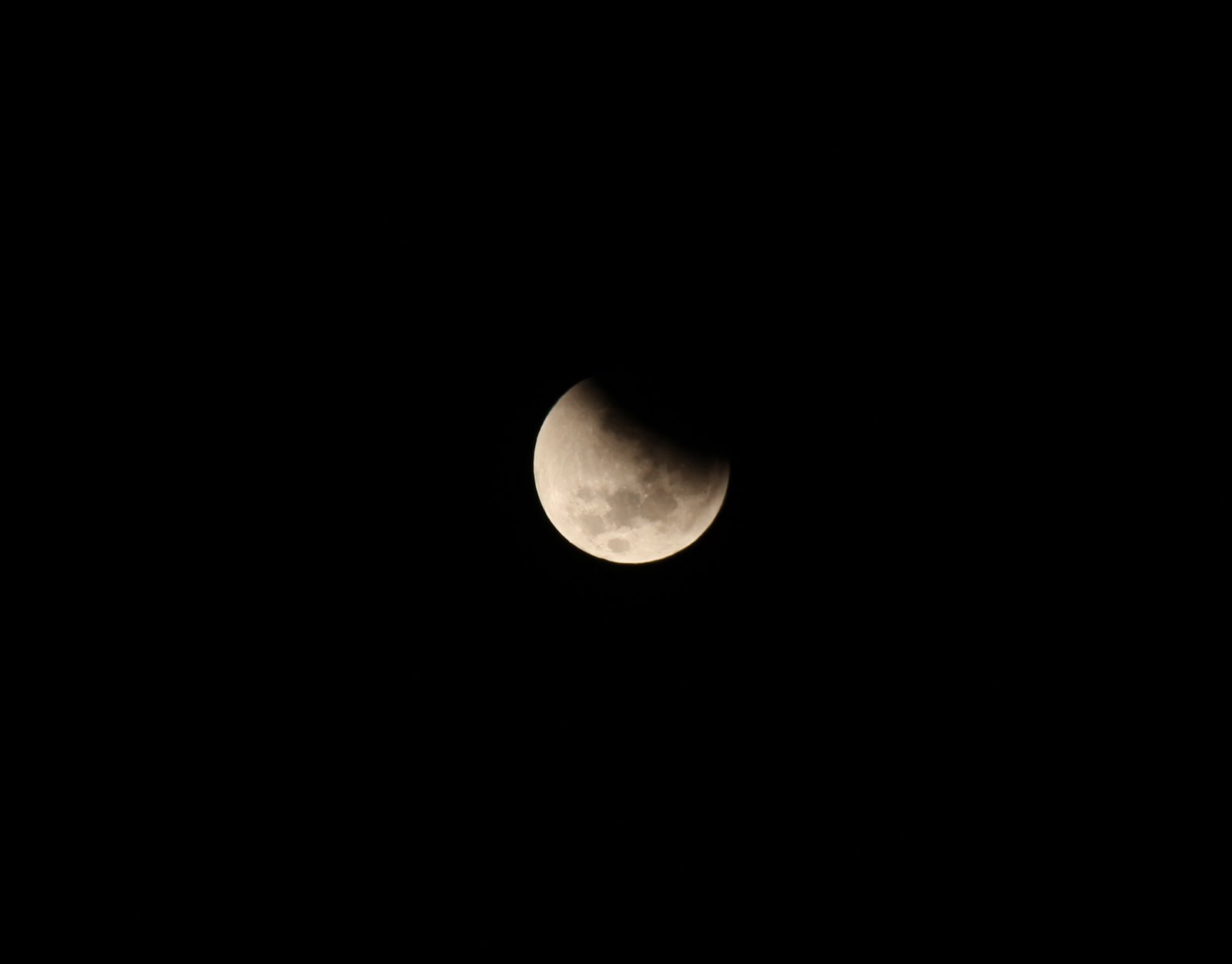
Lunar Eclipse 15th (16th)AEST June 2011


And so as the moon sets in Melbourne, the trailing limb is just starting to brighten and the eclipse zone moves on across Asia towards Europe..... I bid you farewell....Have a great day! Thanks for visiting.


Thats a deep eclipse I'm down to ISO6400 and 1/10 of a second now....and its getting "scraggly" when I crop it tight. Can see some stars there now as well.


The eclipse has now entered totality, which will be quite long this morning, as the Moon is passing very close to the center of earths shadow. In Melbourne its only about 25 degrees above the horizion now so we shall get some deeper color as it catches a bit more of the volcanic ash just before dawn.


Wow...Now we are talking!!


The Eclipse is now in full swing as the umbral stage draws to a close.


Seen one lunar eclipse - seen them all? Most certainly not.....every time I ask myself that question, I also ask ..... How many have my kids seen? It always gets me out of bed one more time.

After all, the excitement our kids get from the awesome realization that the shadow of the earth is going to creep across the Moon, is quite infectious, and seeing it through their eyes once more is great.

This year the prospect of seeing it with a lot of volcanic ask (nearby Melbourne) and in the upper atmosphere generally, in both hemispheres makes this one of some extra scientific interest.

So is 4:30am is 2 degrees centigrade and the eclipse has begun.

Saturday, June 11, 2011

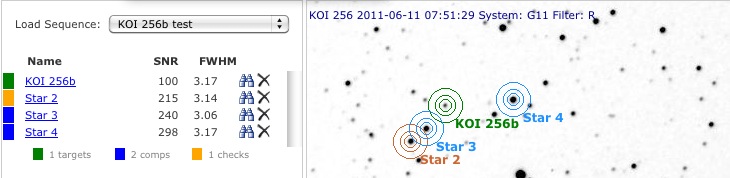
Live blogging on KOI 256b Transit

UPDATE #10 13:00 UTC
Data uploaded to TRESCA ETD. All in all a fine nights work. The transit occurred earlier than the prediction as we have previously noticed - Thanks to Eugene at Pulkovo Observatory. One pleasing aspect I managed to lift my DQ from 5 to 4 (Data Quality factor).

The predicted mid-point was 2455723.828 TRESCA modelling of the actual mid-point was 2455723.8167.

Good night! Live Blog Ends.

UPDATE #9 12:30 UTC
Data processed about to upload to TRESCA database.


UPDATE #8 11:10 UTC
The brief sharp dip just after the egress corresponds to the images immediately either side of the Meridian Flip. I'll take those outliers out of the finished data. Sometimes before/after a mid image run meridian flip, the scope will slighly mistrack and takes a minute or two to get back into its rythmn.


UPDATE #7 10:50 UTC
The run on the scope has nearly finshed, only three images to go. I have run the data so far through a rough photometery seq, we can clearly see a beautiful transit. Now for the data processing and upload to TRESCA.

UPDATE #6 10:00 UTC
Riversong enters the fray, after Rory's brave stand ...Riversong is Amy's Daughter (spoiler alert), ah I should have written that first....ah well the timelines have been mixed.... ah back to the important matters at hand the egress has been detected. Note: this is still raw data

UPDATE #5 09:10 UTC
The signal to noise is higher tonight as desired.


UPDATE #4 09:00 UTC
Whilst the actual transit has now passed about 30 mins ago the Data is now coming in from the server. After 40% of the run is completed we can clearly see our little friend has indeed passed in front of the Parent star. I am yet to get a reading on the ingress and mid transit time - Later ;-) once we have some more data.


Update #3 8:30 UTC
For those of you asking how the The "Rockling poached in Lemon Grass, Fennel, Mirin, and white wine turned out? D E L I C I O U S!!! [OK, some of you are starting to suspect this is a shameless plug to drive up traffic on my blog.] Seriously... the world is about to stop as our family seeks answers to Riversong's fixation with Dr Who.


UPDATE #2 07:20 UTC
The predicted ingress was 07:14 UTC so the transit should be well under way. We are about 1/3 into the run as the scope has imaged 30 x 120 sec exposures already. These are yet to start downloading to the VPHOT server but should do so soon.


UPDATE #1 06:30 UTC
The run is underway. We are starting well ahead of the transit time tonight so we have a good stable light curve before the transit. A beautiful night! Looks like the moon is not causing any dramas for us.


It's the weekend, and a long one. Thanks to the celebration of the House of Windsor's most senior stateperson's birthday, which ironically is NOT today, nor in fact on Monday either, however celebrated none the less by those uncooperative convicts shipped out 200 years ago. ;-)

The most important person in the house is writing reports, two are studying and one is 27 chapters into Septimus Heap, which had to be purchased before rapid closures of book stores, because apparently there are too many iPADs and eBook readers in the world.

So I thought what else does one do, well there are 8 Kepler Objects of interest transiting every hour today (not all reachable by me.....but some are). So time to roll up the sleeves and make sure I am pulling my weight!!!

I am on kitchen duty as well, so between poaching (as in a frying pan, not from someones private river) a beautiful fillet of Rockling (white fleshed fish) in Mirin, fennel, dill and white wine, I will be doing a live blog for the next three hours on the transit of KOI 256b.

KOI 256b is a very interesting member of the Kepler Objects of Interest (1235 publically published list of transit candidates from the Kepler Space Telescope). It is a very interesting object as its transit is "somewhat" synchronous with its Minima of the variation of its parent star's brightness.

Its a good target (~17mmag) shallow enough to make you carefully plan your run and exposure times, and has the shortest duration of any of the published transit list. So that makes it interesting as you don't have to sit up half the night / or in my case half the afternoon (ah the joys of remote armchair astronomy).

I booked my reservation on GRAS G11. We'll be doing 100 x 120sec images on the target. I did a run last week (60 sec images) and the signal to noise ratio on the target averaged about 63, which was a bit low, for my liking so today I'll go with 120 Sec exposures.

The Pulkovo Observatory and a couple of other amateurs are following this object and I think we have come across some interesting things, so we are working closely to compare our notes, and increasing our data coverage of this little fellow.

Remember as an amateur astronomer I'm not qualified to say "Why" & "How" things happen, I just confine my comments to "What", and "When". The run is under way and Updates will now occur at the top of the Blog. Thanks for joining us for this special event.

Friday, June 3, 2011

Following in Kepler's Footsteps


Carnival of Space...Happy 200th episode, webisode, Bi-centenial (no that's years) or as we say in Australia - 200 Gamer!! Congratulations!!!, what a triumph for social media, education outreach for astronomy and all round great fun.

As its the 200th edition, I thought I better pull out all stops and put together a bumper post!

As an amateur astronomer, I consider myself exactly that, amateur, someone who has the passion, the toys, but hasn't got around to the 4 years of study at Swinburne Astronomy. However the contribution from amateur astronomers is still important, as they can do things at their own pace, share their passion, go after targets of opportunity, targets not likely chased by other professional observatories, and assist the real scientists who know how to do the scary math.

So when the Kepler team published an inviting list of 1235 transit candidates, it was only a matter of time before these "private detectives" started poking around.

Anyone can be involved in the Kepler Hunt, and today I'll cover three different levels where each and everyone of you could assist in bagging a transit, and help share the load of the monumental task of following up the data generated by the Kepler research. By Kepler, of course, I am referring to the space telescope named after 17th century astronomer and mathematician Johannes Kepler, which is currently photographing (continuously) 160,000 stars.

This week, I bagged a transit on one of the 1235 candidates in the publicly released Kepler data. Out of respect for the program, I'll leave the science in its proper place - the TRESCA ETD (Exoplanet Transit Database).


The importance of this is quite interesting as the target has a 6 hour transit, and a thirty day orbit, which means that the transit is only visible to earth based telescopes three times a year.....the next window is in August. The only people likely to pick up what is, lets be honest, probably a fairly low value target, is the amateur community. However ....... data is data!!

Given the number of multiple planet systems and other crazy configurations discovered so far, a single hot Jupiter crossing near the equator every 30 days is possibly - completely boring. However for an Amateur - a real test of skill, patience and sense of accomplishment and involvement in the program.

The challenges of this target were interesting:
1) The transit was 6 hours long, almost impossible to get a complete transit lightcurve - So I focused on the Egress which was well positioned.

2) The depth of the transit was a bit of an unknown - It looked big in the Kepler Data lightcurve in the MAST database.....but as Kepler is a space telescope there is no atmospheric extinction to worry about, they don't use comparison stars and they measure direct flux variation in parts per million - hard to know what that would look like down here. So I took a punt and picked the biggest depth, in the best position I could find on the given night - KOI 189b.

3) There were no AAVSO reference stars in the FOV. In exoplanet research there is much less reliance on cataloged reference stars as the photometry is based more on total flux, compensation for airmass, extinction, and camera noise etc. However basic differential photometery can still produce reasonable results, as my recent run on HAT-P-3b confirmed.


4) towards the end of the run, the Moon rose and messed around with my sky glow background values, causing some additional noise in the signal.

All good learnings for the future.

Bagging Transits
The are three levels of involvement in Kepler exoplanet research: Citizen science, Serious Amateur, Guest Observer. (I guess there is a fourth being on the actual Kepler Team).


Zooniverse has teamed up with the Kepler Team to provide yet another element to their hugely popular Citizen Science program, first pioneered by Galaxy Zoo. A veritable army of 429,000 members have an account, some look at the Kepler light curves, classify the star type and use an adjustable rectangular overlay to highlight any observed transits. This is a lot of fun and teaches you a lot about the many different star types and has the mandatory comment, share and chat functions. Every now and then they will throw in a known target and cheer you on for correctly identifying it. In addition to the 80 odd newly discovered transits, hundreds of eclipsing binaries have also been identified.

Join up today and bag a transit yourself!

Serious Amateurs participate in exoplanet research and contribute to the TRESCA ETD. This work was pioneered by legendary amateur Exo-hunter Bruce Gary, who deveolped somewhat of a cult following. Finding it difficult to maintain a growing database of Lightcurves, he teamed up with the Czech Astronomical Society who already had a scalable repository for light curves - and it even deals with the Scary Math for you!!!

Kepler Guest Observer Program is for professional astronomers to submit proposals for new observations that sit outside the core Kepler Mission Goals:
* Provide a statistically significant value for the frequency of Earth-size and larger planets in and near the habitable zone;
* Characterize the size and orbital distributions of such planets;
* Identify correlations between the presence and characteristics of planetary systems with stellar properties of the host star.


The Kepler Team maintain a database of lightcurves in MAST Multimission Archive at Space Telescope Institute. MAST contains all the lightcurves including the "public list" of transit candidates, some of this data is proprietry, and can be made available to guest observers. They publish a list of the 1235 "public targets" that were covered in Boruki et. al. 2011 These are made available for professionals and amateurs alike, to formulate their own research and leverage the wider Astronomy community.

(note: earth sized planets are so tiny their transits are only a few 10,000ths of a magnitude and are out of reach for earth based amateur scopes)

Collaborative efforts like Zooniverse / Planethunters.org is one such example of the broader astronomy community using this data.

For me, my target KOI 189b, was listed as "No Obs" in the comments field, certainly sounded like an invitation ;-)

So here's to the Carnival of Space that keeps driving my interest to new and higher levels of involvement, in the great unanswered questions.

The work pays off, sometimes in very unexpected ways. This FMO flew through the field of view as I was doing some test images mid transit about an hour and a half before I got serious about the Egress. At 600 arcsecs/min its possibly a Geo-Stationary satellite, but a little unusual to say the least.


Happy 200th - Carnival of Space!!!

Search

Custom Search